01 · BEFORE
Patient Assessment
We review relevant medical history and consider patient-specific health concerns.


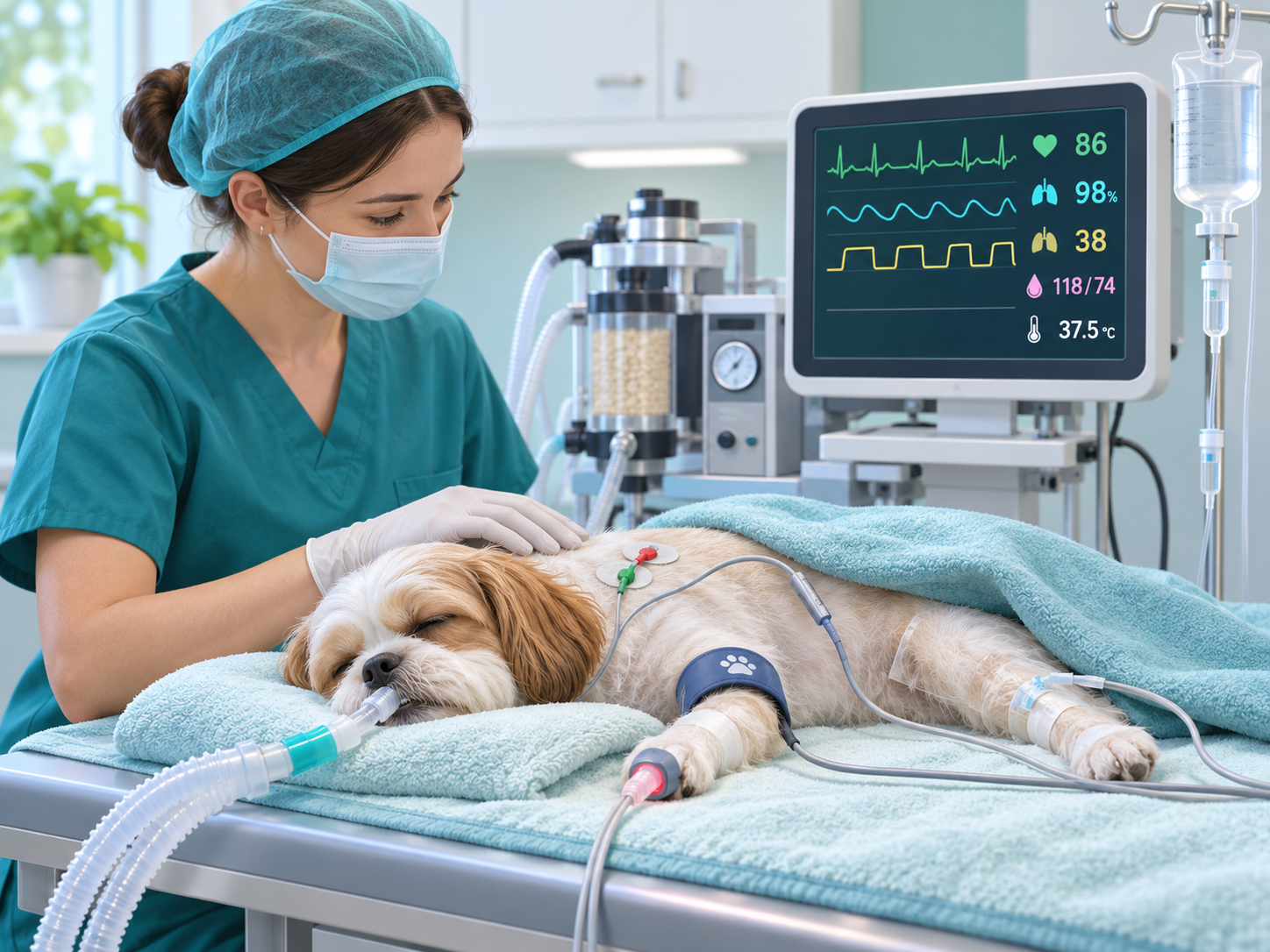
We review relevant medical history and consider patient-specific health concerns.
We plan anesthesia with attention to the patient and the needs of the procedure.
We consider pain prevention and relief as part of the treatment plan.
Post-anesthetic observation and discharge planning are part of surgical care.
An anesthetic plan should reflect more than the procedure alone. Age, breed, medical conditions, current medications, and findings from the veterinary examination can all influence the approach.
During general anesthesia, the veterinary team assesses the patient’s anesthetic depth and physiological condition. Depending on the patient, procedure, and equipment used, monitoring can involve:
Important: Monitoring methods and individual anesthetic protocols are selected based on clinical circumstances. Your veterinarian can explain which measures are planned for your pet’s procedure.
Managing pain is an important part of surgical care. Depending on the patient and procedure, the veterinarian may recommend medications before, during, or after surgery and may use local or regional anesthetic techniques where appropriate.
We also discuss home care, medication instructions when prescribed, and signs of discomfort or complications that should prompt a call to the hospital.
Patients need observation as anesthetic effects wear off. Recovery planning considers alertness, comfort, breathing, temperature, and the individual patient’s needs. Discharge instructions explain what you can expect at home and when to seek veterinary attention.
Certain conditions may increase anesthetic risk or require resources beyond those available in a general veterinary practice. For some pets, an appropriately equipped referral or emergency hospital with advanced or continuous monitoring may be the better setting.
If referral is recommended, we will explain our concerns and discuss the options with you. Our priority is matching the patient’s needs with an appropriate level of care.
No anesthetic procedure is entirely without risk. We assess each pet’s health and individual risk factors, discuss any concerns with you, and develop an anesthetic plan appropriate for the patient and procedure.
Age alone does not necessarily prevent anesthesia. A senior pet’s overall health, examination findings, and any existing medical conditions are more important considerations. Additional testing or referral may be recommended for some patients.
Pre-anesthetic blood testing may be recommended to assess organ function and identify health concerns that could affect the anesthetic plan. Your veterinarian will discuss which tests are appropriate for your pet.
We review known medical conditions and current medications before planning anesthesia. Some pets may require additional diagnostic testing, changes to the anesthetic approach, or referral to a facility with advanced anesthetic support and continuous monitoring.
Your pet may be sleepy as the anesthetic medications wear off. We will provide discharge instructions covering activity, feeding, prescribed medications, wound care when relevant, and warning signs. Contact us promptly if you notice breathing difficulty, marked weakness, uncontrolled pain, persistent vomiting, or other concerning changes.
We’re happy to discuss the recommended treatment, anesthesia considerations, and what to expect before and after surgery. Please call our team to arrange an appointment.